[ Decarbonization ]
The Approach >> Decarbonization 's Career Path >> MACF (CBAM)
Decarbonization : develop a realistic and manageable climate roadmap
Decarbonizing an entire value chain is a major undertaking for a company, especially if it has multiple locations. To help our clients develop a clear and structured Decarbonization strategy, we have developed a step-by-step support program that meets the expertise needs of both international corporations and mid-sized companies.



Your 5-Step Path to Becoming a " Decarbonization "
Defining a coherent Decarbonization strategy can become a stumbling block for an organization: where to start? How can the process be successfully completed within a manageable timeframe? How can the organization handle the additional workload while finding the necessary skills internally?
This is where our role at Maliro begins. We step in to support internal teams and meet their needs for specific expertise through a five-phase support process:
- Raise awareness among your stakeholders
- Calculate Your Carbon Footprint
- Define your goals for Decarbonization
- Implement measures to reduce greenhouse gas emissions
- Build momentum around your climate results
1. Raise awareness among your stakeholders
First objective: to ensure that all of your employees and suppliers, regardless of their geographic location, share a common understanding of the challenges associated with the low-carbon transition. Through our multilingual workshops, everyone understands what we’re working toward and the role they can play in this effort. We also explain the legal requirements and the rationale behind these sometimes complex (and constantly evolving) regulations, such as the Carbon Border Adjustment Mechanism (MACF).
Second objective: ensuring that all relevant stakeholders are methodologically aligned. Indeed, a successful “ Decarbonization ” approach requires that stakeholders from multiple countries, multiple sites, and multiple business units within a company apply the same frameworks and use identical standards to measure the carbon footprint of their activities and products. Our expertise in education and stakeholder engagement has taught us to adopt a funnel-like approach: we gradually increase the level of technical detail so that everyone can engage with the subject from the start and experience the satisfaction of developing their skills.
2. Calculate Your Carbon Footprint
We conduct your carbon footprint assessment to identify the sources of your greenhouse gas emissions, in accordance with the ABC’s BilanCarbone® standard or the GHG Protocol. In both cases, the goal is to assess all greenhouse gas emissions—both direct and indirect—generated by an organization over a given period.
Emissions are classified under Scopes 1, 2, and 3:
- Scope 1 represents your direct greenhouse gas emissions—that is, those produced by your company’s equipment (such as furnaces, dryers, boilers, or your fleet of internal-combustion vehicles).
- Scope 2 refers to indirect emissions resulting from electricity, heating, or cooling purchased and used by your company.
- Scope 3 accounts for indirect emissions in your value chain: those generated by your purchases of products or services (upstream), those related to their consumption, and finally those resulting from end-of-life treatment of products (downstream). It is within Scope 3 that the majority of a company’s greenhouse gas emissions are concentrated.
Regardless of the framework chosen, our carbon assessments always consist of five steps:
- Definition of operational and geographic scopes (sites, countries, as well as relevant scopes and emission sources, etc.)
- Mapping of Incoming and Outgoing Flows Using a Flowchart
- Collection of Activity and Emission Factor Data
- Calculating the Carbon Footprint
- Reporting of Results
We are implementing a reliable and sustainable methodology so that the carbon footprint assessment can be conducted annually as part of a continuous improvement process.
3. Define Your " Decarbonization " Goals: Objectives and Transition Plan
Using benchmarks, industry analyses, and the sharing of best practices, we help you set goals that make sense given your industry, resources, obligations, and business cycles. We can support you in the SBTi (Science Based Targets initiative) process to ensure that your emissions reduction targets are aligned with global climate goals—particularly those of the Paris Agreement. This involves defining both a short-term target and a long-term target based on a baseline year.
We also work with your key departments to identify potential em Decarbonization, quantify them, and integrate them into a 3-, 5-, and 10-year roadmap.
We simulate various dec Decarbonization scenarios that highlight the cost associated with each project (marginal abatement cost) and its ease of implementation, with projections over time. This gives you a clear picture of the feasibility of each project and allows you to prioritize implementation. The result: a realistic transition plan to guide your low-carbon transition, which can be rolled out across all functions of the group and communicated to all your stakeholders: executive committee, board of directors, investor committee, business units, suppliers, customers, investors, and more.
4. Implement your Decarbonization
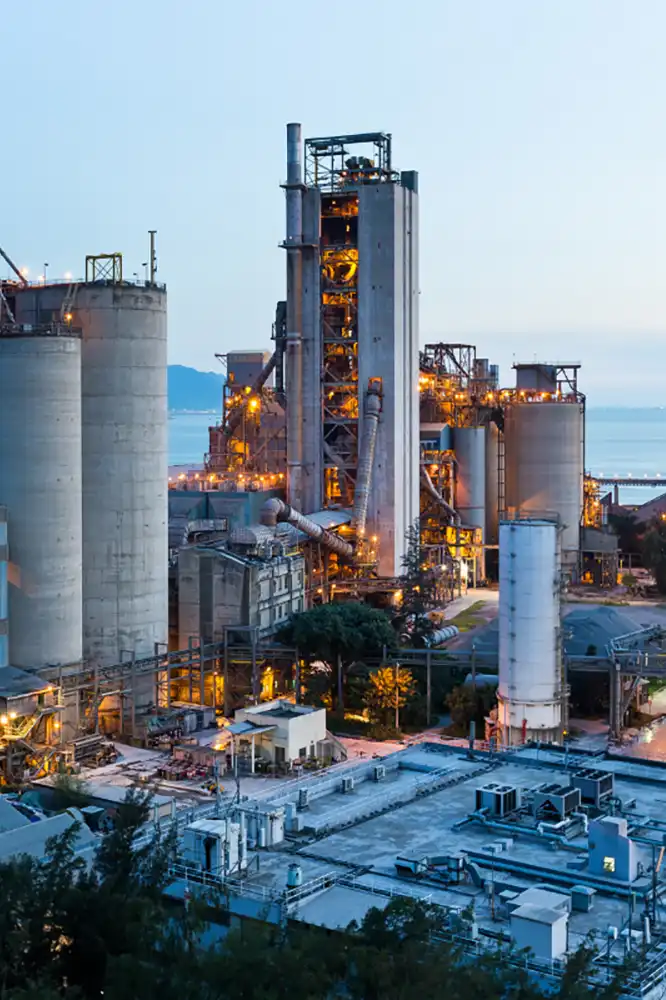
This is at the heart of a “ Decarbonization ” initiative: implementing planned actions to reduce emissions. We regularly manage this type of program, which requires strategic and operational skills in change management. Feel free to explore our case studies at the bottom of this section.
We work alongside you every day to translate your “ Decarbonization ” strategy into concrete actions for all your stakeholders (employees, suppliers, and customers), across all relevant scopes:
Scopes 1&2 :
- Implementation of an energy conservation and efficiency plan to reduce your energy consumption
- Replacing thermal energy with biomethane, biomass, or heat recovery
- Sourcing Renewable Electricity
- Anticipating Technological Disruptions
Scope 3 :
- Commitment of your suppliers to a process of Decarbonization
- Incorporating the carbon footprint into procurement processes: product specifications, supplier selection, and contract negotiations
- Collaborative initiatives with your strategic suppliers.
It is within this scope that Responsible Purchasing—an area in which we also support many clients.
All of these initiatives lead to a profound transformation of the company’s processes—and even its internal culture.
Our role at Maliro is to act as a transition facilitator: we work alongside our clients to successfully transform complex operational systems while navigating carbon, economic, and organizational constraints.

Change Management

Team Engagement

Coordination

Climate Performance
5. Build support around your climate results
Highlighting the observable results of “ Decarbonization ” initiatives is essential to fostering long-term engagement among employees, customers, suppliers, and investors, and to advancing the transformation of business practices.
To sustain engagement over the long term, we help our clients translate “ Decarbonization ” into actionable topics:
- Management: by making carbon considerations an automatic part of decision-making and management routines, budget planning, and the monitoring of key performance indicators.
- Collective: by linking the “ Decarbonization ” initiative to business objectives—that is, by integrating the “ Decarbonization ” mission into each employee’s daily work.
- Success: by demonstrating “evidence of progress” based on visible results, which not only build credibility but also sustain motivation over the long term; indeed, profound transformations take years, so it is essential to create the conditions necessary to ensure that the collective momentum of the early stages does not fade.
Regular and honest communication is a key factor in ensuring that an operational project is credible, beneficial to the business, and effectively managed. In particular, we help CSR departments synthesize the relevant information and metrics for non-financial reports by liaising with operational departments.